How IT Hardware and Cloud Computing Power Modern Business
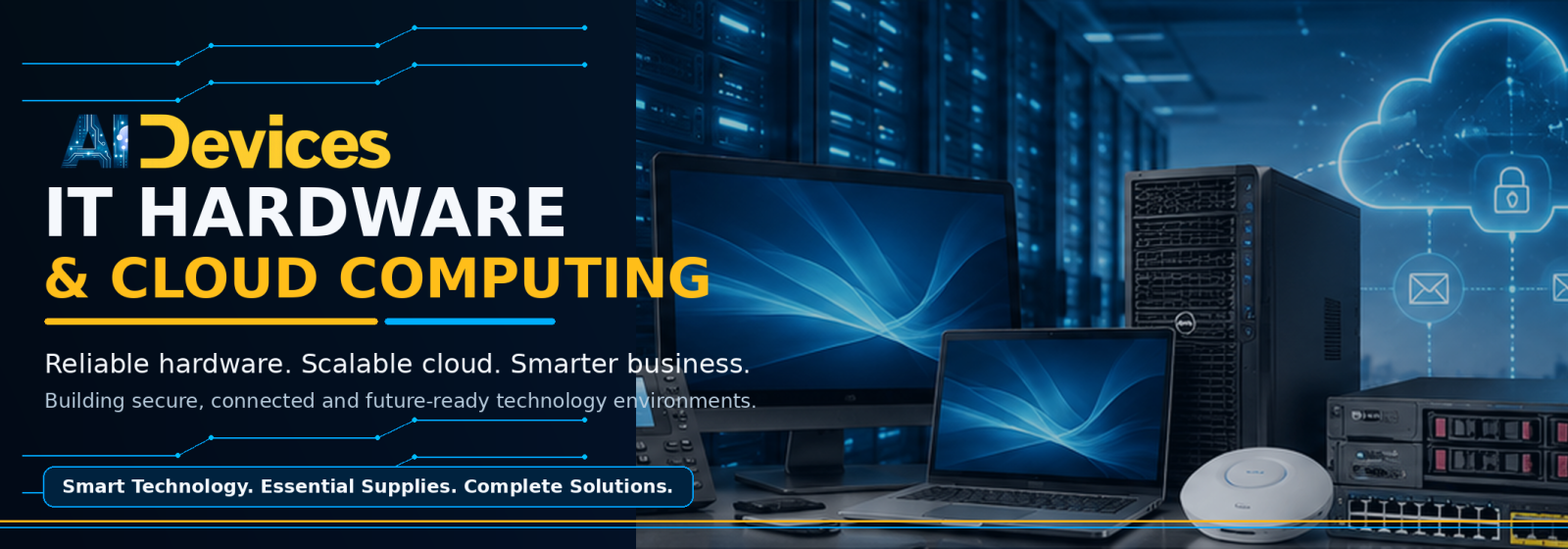
Technology has become the foundation of modern business operations. From employee productivity and customer communication to data management and cybersecurity, organizations depend on reliable digital infrastructure to remain efficient, competitive, and prepared for growth. Two essential components make this possible: IT hardware and cloud computing.
IT hardware provides the physical foundation required to operate, connect, process, and store information. Cloud computing extends that foundation by giving businesses scalable access to applications, data, computing resources, and collaboration tools through secure online environments. When implemented together, hardware and cloud technologies create a flexible and future-ready IT ecosystem.
At Ai Devices Online LLC, we help businesses, government agencies, educational institutions, healthcare organizations, and other professional customers source dependable IT hardware and technology solutions for their operational requirements.
The Essential Role of IT Hardware
Every digital operation begins with physical technology. Computers, servers, networking equipment, storage devices, monitors, peripherals, and communication systems enable employees to perform daily tasks and allow organizations to manage critical information.
Reliable IT hardware can improve productivity, reduce operational interruptions, and provide the performance required for demanding business applications. A well-planned hardware environment may include:
- Desktop computers, laptops, workstations, and thin clients
- Servers, storage systems, and data-center equipment
- Routers, switches, wireless access points, and firewalls
- Monitors, printers, scanners, and communication devices
- Memory, processors, drives, components, and accessories
- Power protection, racks, cabling, and infrastructure products
Selecting the correct equipment is important because every organization has different performance, security, mobility, and budget requirements. A small office may need dependable laptops, printers, wireless networking, and cloud-based productivity software. A larger organization may require enterprise servers, centralized storage, high-capacity networking, secure remote access, and advanced backup systems.
Quality hardware also supports business continuity. Durable devices, properly sized storage, reliable networking equipment, and appropriate power protection can reduce downtime and help employees remain productive.
The Power of Cloud Computing
Cloud computing allows businesses to access technology resources without depending entirely on equipment located inside their own facilities. Applications, files, databases, backup systems, virtual servers, and collaboration platforms can be delivered through secure cloud environments.
This approach provides several important advantages.
Scalability
Cloud services can expand or contract according to business requirements. Organizations can add storage, users, applications, or computing capacity without immediately purchasing and installing extensive new infrastructure.
Accessibility
Authorized employees can securely access business applications and information from offices, homes, customer locations, or other approved environments. This supports remote work, mobile teams, and organizations operating across multiple locations.
Collaboration
Cloud-based productivity and communication tools allow employees to share documents, communicate in real time, manage projects, and work together more efficiently.
Backup and Business Continuity
Cloud backup and disaster-recovery solutions can help protect important information from hardware failure, accidental deletion, local disasters, and other operational disruptions.
Cost Management
Cloud computing can reduce the need for organizations to maintain every application and computing resource on local infrastructure. Subscription-based services may also make technology expenses more predictable.
Why Hardware and Cloud Solutions Work Better Together
Cloud computing does not eliminate the need for dependable IT hardware. Employees still require computers, monitors, networking equipment, communication devices, and secure access points to use cloud services effectively.
For example, a cloud-based business application will not perform well if employees are using outdated computers or unreliable network connections. Similarly, advanced cloud security cannot fully protect an organization if local devices are poorly maintained or improperly configured.
A successful technology environment combines:
- Reliable endpoint devices for employees
- Secure and high-performance networking equipment
- Appropriate local and cloud storage
- Cloud-based productivity and collaboration platforms
- Cybersecurity, backup, and recovery solutions
- Centralized monitoring and device management
This integrated approach allows businesses to benefit from the performance of modern hardware and the flexibility of cloud computing.
Building a Secure Hybrid IT Environment
Many organizations use a hybrid IT model, combining local hardware with cloud-based services. Certain applications or data may remain on internal servers, while email, collaboration, backup, customer management, or productivity tools operate in the cloud.
A hybrid environment can provide greater flexibility, but it must be carefully planned. Businesses should consider device security, user authentication, data encryption, network protection, access permissions, backup policies, and software updates.
Hardware and cloud security should be treated as one connected strategy. Firewalls, secure wireless equipment, endpoint protection, multifactor authentication, encrypted storage, and regular backups all contribute to a stronger technology environment.
Choosing the Right Technology Solutions
Technology purchasing should begin with a clear understanding of the organization’s requirements. Important considerations include:
- Number of employees and business locations
- Applications and workloads being used
- Storage and performance requirements
- Remote-access and mobility needs
- Security and compliance obligations
- Future expansion plans
- Available budget and product lifecycle
Organizations should avoid purchasing equipment based only on the lowest initial price. Reliability, warranty coverage, compatibility, performance, manageability, and long-term operating costs are equally important.
The correct technology investment should support current operations while providing enough flexibility for future growth.
How Ai Devices Online LLC Supports Modern Organizations
Ai Devices Online LLC provides access to IT hardware, computers, networking equipment, servers, storage products, peripherals, accessories, software, and cloud-related technology solutions. We help professional buyers simplify procurement and source products appropriate for their operational environments.
Whether an organization is upgrading employee computers, expanding its network, building a server environment, improving cybersecurity, implementing cloud services, or preparing for future growth, dependable technology remains essential.
By combining reliable hardware with scalable cloud computing, businesses can improve productivity, strengthen security, support collaboration, and respond more effectively to changing operational demands.
Smart Technology. Essential Supplies. Complete Solutions.