
How Technology and Responsible Procurement Support Public Safety and Environmental Causes
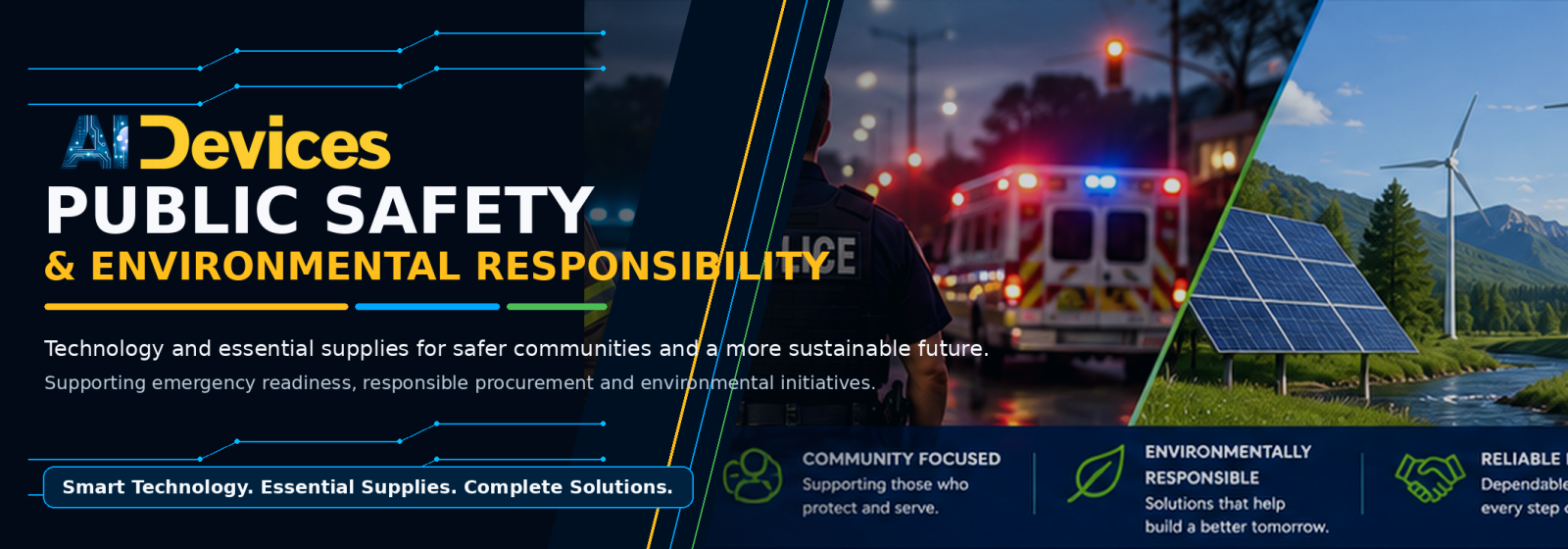
Safe communities and a healthy environment are essential to long-term social and economic well-being. Public-safety organizations protect lives, property, and infrastructure, while environmental initiatives help conserve resources, reduce waste, and create more sustainable communities.
Both areas depend on dependable technology, appropriate equipment, efficient communication, and responsible procurement. From emergency-response systems and medical supplies to energy-efficient technology and environmentally preferable products, purchasing decisions can directly influence operational effectiveness and environmental impact.
At Ai Devices Online LLC, we support public-safety organizations, emergency-response teams, government agencies, businesses, and institutions with technology, equipment, and essential supplies for safer and more responsible operations.
Technology’s Role in Public Safety
Public-safety professionals often work in situations where speed, accuracy, and reliable communication are critical. Law-enforcement agencies, fire departments, emergency medical services, emergency-management teams, and disaster-response organizations require technology that can perform consistently in demanding environments.
Their technology requirements may include:
- Rugged laptops, tablets, workstations, and mobile devices
- Radios, headsets, telephones, and communication accessories
- Networking equipment, wireless access points, and secure connectivity
- Surveillance, monitoring, imaging, and documentation equipment
- Mobile printers, scanners, storage devices, and vehicle technology
- Backup power, batteries, chargers, generators, and power protection
- Software, cloud services, cybersecurity, and data-backup solutions
Reliable technology helps response teams coordinate personnel, share information, document incidents, communicate with other agencies, and make informed decisions.
Emergency Preparedness and Response Supplies
Technology alone cannot provide complete operational readiness. Public-safety organizations also require medical, protective, tactical, industrial, and facility-support products.
Emergency and response supplies may include:
- First-aid kits, trauma products, diagnostic devices, and medical consumables
- Protective clothing, gloves, helmets, eyewear, respirators, and safety equipment
- Flashlights, portable lighting, batteries, and emergency power products
- Rugged cases, storage containers, equipment bags, and organizational products
- Traffic-control, warning, signaling, and scene-management products
- Tools, maintenance products, cleaning supplies, and facility essentials
- Water, sanitation, shelter, and disaster-preparedness equipment
Maintaining suitable inventory levels can help organizations respond quickly without waiting for critical supplies to arrive after an emergency has already begun.
Reliable Communication During Critical Events
Communication failures can significantly affect emergency operations. Public-safety teams require dependable communication channels that remain available across offices, vehicles, command centers, and field locations.
A resilient communication environment may combine radio systems, mobile devices, wired and wireless networks, cloud-based platforms, backup power, and redundant connectivity.
Organizations should evaluate coverage, security, interoperability, equipment durability, battery performance, and compatibility with existing systems. Backup communication methods should also be considered for situations in which the primary network becomes unavailable.
Cybersecurity and Information Protection
Public-safety agencies manage sensitive information, including incident records, operational plans, personnel data, medical information, video evidence, and communication records.
Protecting this information requires more than installing antivirus software. A complete security strategy may include:
- Secure endpoint devices and properly configured networks
- Multifactor authentication and identity-management controls
- Data encryption and access restrictions
- Firewalls, endpoint security, and threat-monitoring tools
- Regular software updates and device maintenance
- Secure cloud storage and reliable backup systems
- Employee training and incident-response procedures
Technology products should be selected according to the organization’s security requirements and applicable policies.
Environmental Responsibility in Organizational Procurement
Environmental responsibility can begin with everyday purchasing decisions. Organizations buy computers, printers, batteries, paper, packaging, cleaning products, furniture, lighting, appliances, and many other operational supplies.
Selecting products based on lifecycle value—not only the initial purchase price—can help reduce waste and improve efficiency.
Responsible procurement may consider:
- Energy consumption and energy-efficiency certifications
- Product durability and expected operating life
- Repairability, upgradeability, and warranty coverage
- Recycled or responsibly sourced materials
- Reusable, refillable, or recyclable product options
- Packaging quantity and recyclability
- Disposal requirements for batteries, electronics, and hazardous materials
- Availability of manufacturer recycling or take-back programs
These considerations can support environmental objectives while also improving long-term cost management.
Energy-Efficient Technology
Modern computers, monitors, printers, networking equipment, servers, and power-management systems may offer significant improvements in energy efficiency compared with older equipment.
Organizations can reduce unnecessary energy use by selecting appropriately sized technology, enabling power-management settings, consolidating underused systems, and replacing inefficient equipment when economically justified.
Cloud computing and virtualization may also help some organizations use computing resources more efficiently. However, cloud adoption should be planned according to security, performance, cost, and operational requirements rather than treated as an automatic environmental solution.
Reducing Electronic Waste
Electronic waste is a growing challenge because technology products contain metals, plastics, batteries, and electronic components that require appropriate handling.
Organizations can reduce electronic waste by:
- Purchasing durable and business-grade equipment
- Extending product life through maintenance and upgrades
- Reassigning functional devices when appropriate
- Using certified recycling or asset-disposition providers
- Removing sensitive data before disposal or transfer
- Separating batteries and other regulated materials
- Maintaining accurate technology-asset records
A structured lifecycle-management process can improve security, reduce unnecessary replacement, and support responsible disposal.
Sustainable Office and Facility Supplies
Environmental responsibility also extends beyond IT equipment. Offices, public facilities, emergency stations, and command centers consume paper, cleaning products, packaging, disposable items, and maintenance supplies.
Organizations may evaluate recycled paper, refillable products, concentrated cleaning solutions, reusable shipping materials, efficient lighting, water-saving products, and reduced-packaging options.
These changes should be assessed for quality, safety, performance, availability, and total cost. Environmentally preferable products must still meet the operational standards of the organization using them.
Public Safety and Environmental Resilience
Public safety and environmental responsibility are closely connected. Extreme weather, flooding, wildfires, poor air quality, infrastructure failures, and other environmental events can create serious public-safety challenges.
Communities become more resilient when agencies have reliable communication, emergency power, medical supplies, protective equipment, water-management products, monitoring technology, and coordinated response systems.
Responsible environmental planning may reduce certain risks, while strong emergency-preparedness programs help communities respond when disruptive events occur.
Building a Responsible Supply Strategy
A well-managed supply strategy should balance performance, availability, cost, safety, and environmental impact.
Organizations can strengthen procurement by:
- Defining technical and operational requirements clearly
- Standardizing frequently purchased products
- Evaluating total cost of ownership
- Reviewing energy efficiency and product durability
- Maintaining emergency inventory for critical items
- Consolidating unnecessary shipments where practical
- Tracking equipment condition and replacement schedules
- Establishing responsible recycling and disposal procedures
The objective is not simply to purchase greener products or larger quantities of emergency supplies. It is to create a dependable system that supports readiness while reducing unnecessary consumption and waste.
How Ai Devices Online LLC Supports Safer and More Responsible Operations
Ai Devices Online LLC provides computers, networking equipment, communication devices, industrial supplies, medical products, tactical equipment, office supplies, emergency products, and facility-support solutions for professional organizations.
We help buyers identify suitable products, simplify sourcing, support operational readiness, and consider responsible alternatives where appropriate.
Whether an organization is equipping first responders, upgrading emergency communications, preparing a facility for disruptive events, reducing energy use, or improving its purchasing practices, dependable products and informed procurement decisions can create meaningful results.
Smart Technology. Essential Supplies. Complete Solutions.